
Concrete vs Pavers for Maryland Driveways and Patios
By Anton Sergeev, Owner — MHIC #113057
When homeowners in Anne Arundel and Howard Counties ask about driveways and patios, the concrete vs. pavers question comes up on almost every project. Both are solid choices — but they perform differently in Maryland's climate, cost differently, and require different levels of maintenance. Here's a straight comparison.
How Does Maryland's Climate Affect Concrete and Pavers?
Maryland's freeze-thaw cycle is the most important factor in this decision. Anne Arundel and Howard Counties typically see 30–50 freeze-thaw cycles per year — temperatures cycling below freezing and back above freezing. Water gets into small cracks, freezes, expands, and makes those cracks bigger. Over time, this is what cracks driveways and heaves patios.
Poured concrete is vulnerable to this cycle because it's a single continuous slab. Once a crack forms, water gets in and the freeze-thaw cycle accelerates the damage. Concrete in Maryland will crack — it's a matter of when, not if.
Pavers handle freeze-thaw better because they're individual units with joints between them. Those joints flex and move slightly with ground movement. When a paver heaves or settles, you can reset it. You can't un-crack a concrete slab.
What Does Concrete Cost vs Pavers for a Maryland Driveway or Patio?
- Poured concrete driveway: $8–$15 per square foot installed, depending on thickness, reinforcement, and finish.
- Concrete patio: $8–$12 per square foot for a standard broom finish. Stamped or decorative concrete adds $5–$15 per square foot.
- Paver driveway: $18–$30 per square foot installed, depending on paver type, pattern complexity, and base preparation.
- Paver patio: $15–$25 per square foot installed for standard concrete pavers. Natural stone pavers (bluestone, travertine, flagstone) run $25–$45 per square foot.
On a 600 sq ft patio, that's roughly $5,000–$7,200 for concrete vs $9,000–$15,000 for pavers. The gap is real — but so is the difference in durability and repairability over 20 years.
Which Is Easier to Maintain — Concrete or Pavers?
Concrete maintenance: Seal every 2–3 years to protect against water infiltration and staining. Clean oil stains promptly — concrete stains more easily than pavers. Cracks should be filled when they appear to prevent water from getting in. In Maryland, plan for crack repairs every 5–10 years on a driveway.
Paver maintenance: Re-seal every 3–5 years. Polymeric sand in the joints needs to be replenished periodically as it erodes. Weeds can grow in joints if not properly maintained. Individual pavers that heave or crack can be replaced without disturbing the rest of the surface — this is the key maintenance advantage.
If a tree root heaves a section of paver patio, you pull up those pavers, address the root, re-compact the base, and reinstall. If that same root heaves a concrete patio, you're cutting out and replacing a section of slab — a much more disruptive repair.
Does Concrete or Pavers Look Better?
This is subjective, but pavers generally offer more visual options. Standard broom-finish concrete is utilitarian. Stamped concrete can mimic the look of pavers or stone at a lower cost, but the stamped pattern is pressed into the surface — it doesn't have the depth and texture of actual pavers.
Pavers come in dozens of shapes, sizes, colors, and patterns. Herringbone, running bond, basket weave, circle kits — the design flexibility is significant. For patios where aesthetics matter, pavers almost always win on looks.
What About HOAs in Anne Arundel and Howard Counties?
Many communities in Anne Arundel and Howard Counties — particularly in Columbia, Crofton, and Severna Park — have HOAs with architectural review requirements. Some HOAs specify approved materials for driveways and front-facing hardscaping. Before committing to either material, check your HOA guidelines. We can help you navigate this as part of the project planning process.
Which Should You Choose — Concrete or Pavers?
- Choose concrete if: Budget is the primary concern, the project is a straightforward driveway or utilitarian surface, and you're comfortable with the maintenance and eventual crack repairs.
- Choose pavers if: You want a higher-end look, the surface has curves or design complexity, you're in an area with significant tree roots or ground movement, or you want the ability to repair sections without full replacement.
- For patios specifically: We lean toward pavers in most cases. The aesthetic difference is significant, the repairability advantage matters for outdoor living spaces, and the cost premium is easier to justify on a project where you're investing in your outdoor living space.
Learn more about our concrete and hardscaping services, or see our work in Annapolis and Columbia. Contact us for a free estimate on your driveway or patio project.
Frequently Asked Questions
How long does a concrete driveway last in Maryland?
A well-installed concrete driveway in Maryland typically lasts 25–30 years with proper sealing and maintenance. Maryland's freeze-thaw cycles accelerate surface scaling and cracking, so regular sealing is important.
How long do pavers last?
Quality concrete pavers installed on a proper base last 30–50 years. Individual pavers can be replaced as needed, so the surface can effectively last indefinitely with proper maintenance.
Can you pour concrete over an existing driveway in Maryland?
It's generally not recommended. Pouring concrete over an existing cracked driveway will result in those cracks reflecting through the new surface within a few years. Proper installation starts with removing the old surface and preparing the base correctly.
Do pavers require a special base in Maryland?
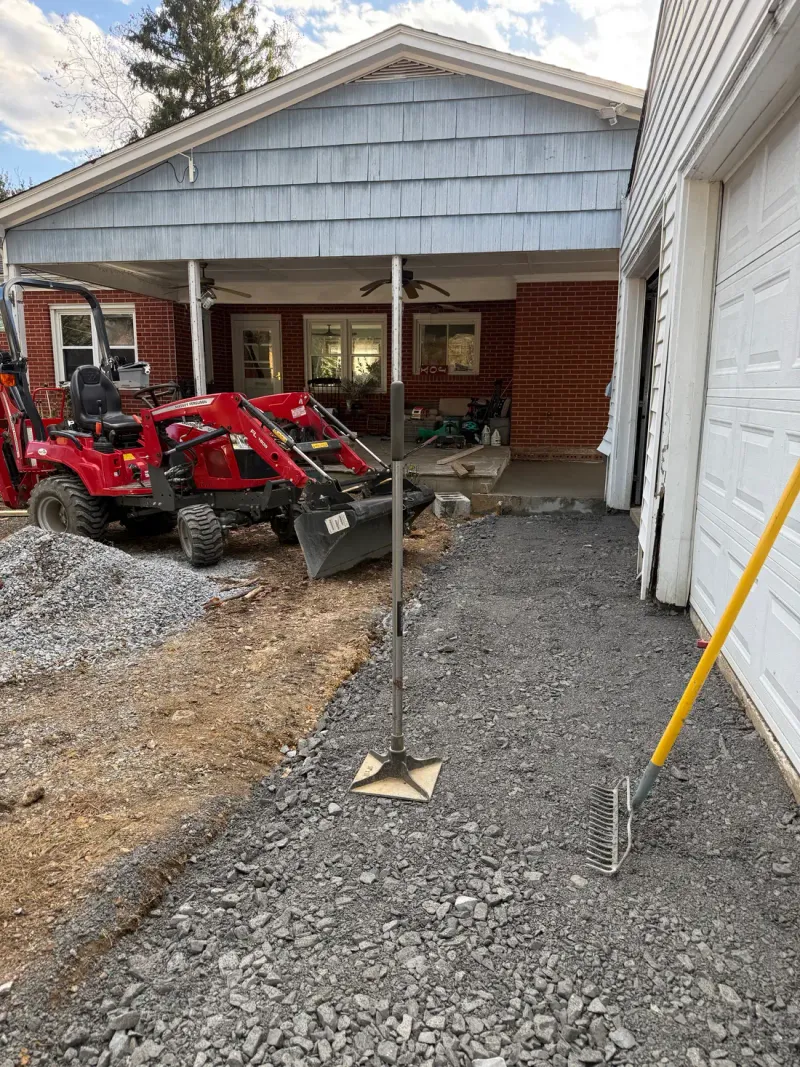
Yes. Proper paver installation requires a compacted gravel base of 6–8 inches for driveways and 4–6 inches for patios, topped with bedding sand. The base is what prevents settling and heaving. Shortcuts on base preparation are the primary cause of paver problems down the road.
What's the best paver material for a Maryland patio?
Concrete pavers are the most popular choice — durable, affordable, and available in many styles. Natural bluestone is a premium option that works well in Maryland's climate and is popular in Anne Arundel County. Travertine is beautiful but more porous and requires more maintenance in Maryland's wet climate.