
The Right Way to Connect Posts to Beams on a Deck
By Anton Sergeev, Owner — MHIC #113057
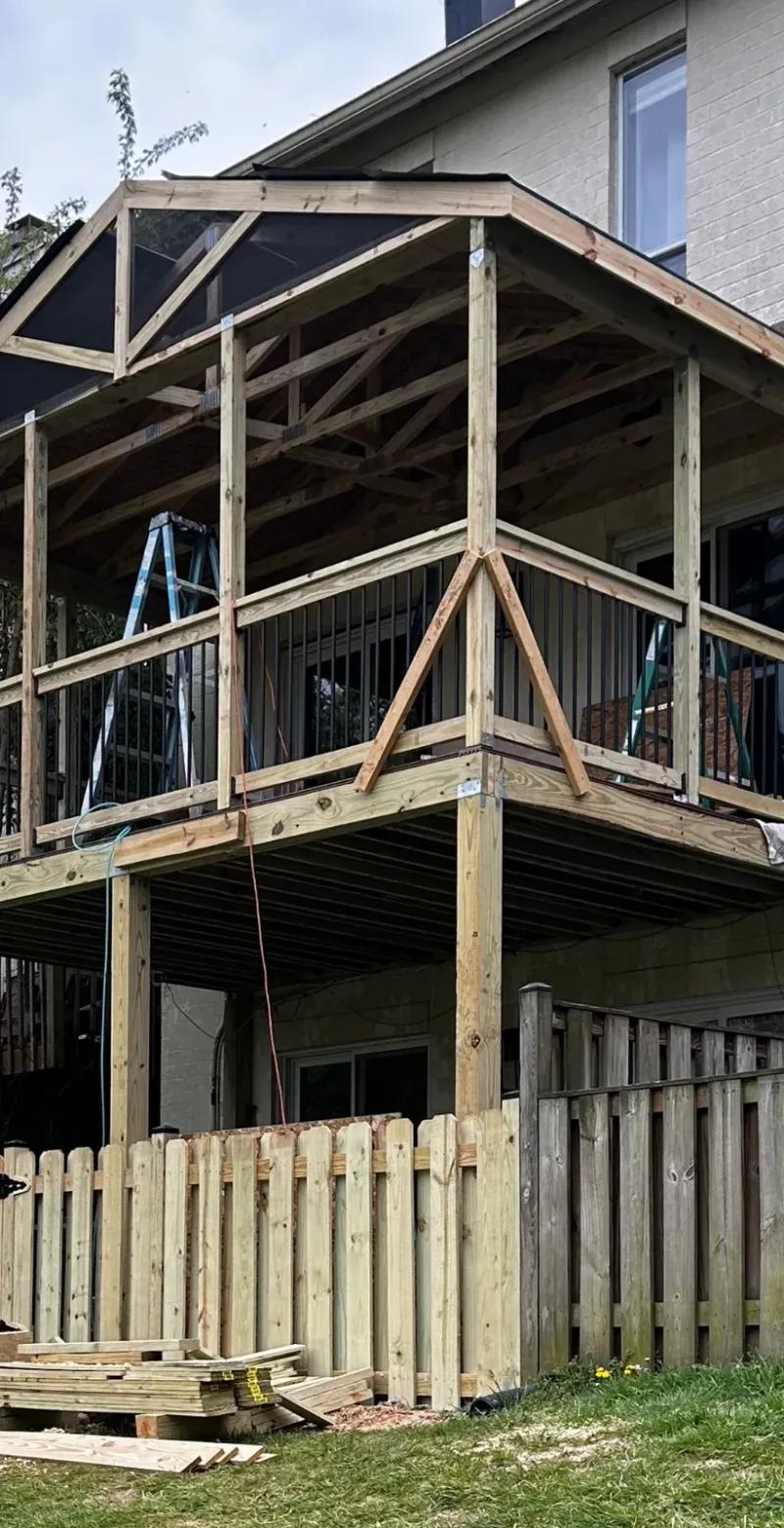
If you drive around Howard County or Anne Arundel County and look under the decks, you'll see the same thing we do: sandwiched beams everywhere. Two 2x boards bolted to either side of a post with no notch — just hanging off the sides. It's one of the most common framing mistakes in residential deck construction, and it's something we see on jobs constantly — old decks, new decks, and even decks that somehow passed inspection.
Here's why it matters and what the right connection actually looks like.
What Is a Sandwiched Beam and Why Is It a Problem?
A sandwiched beam is when two boards — usually 2x10s or 2x8s, and sometimes we even see 2x6s — are bolted to either side of a post without the post being notched. The post runs straight through, and the beam plies just hang off the sides.
The problem? The entire load of your deck — joists, decking, furniture, people — is being held up by the shear strength of a few bolts. There's no bearing surface. The bolts are doing all the work, fighting against the weakest direction of the lumber. Over time, bolts crush into the wood, holes elongate, and the beam starts to sag or shift. In a worst-case scenario, the connection fails.
When we see 2x6s used as beam material, that's a serious red flag. A 2x6 is not a beam — it does not have the depth to carry deck loads across any meaningful span. Two 2x6s sandwiched on a post is one of the most dangerous configurations we come across. The lumber is too shallow to resist bending, and the connection has no bearing surface. If your deck has 2x6 beams, get it looked at immediately — that is a safety issue, not just a code violation.
What Does the Right Post-to-Beam Connection Look Like?
The beam sits on top of the post and is secured with a metal post cap. Here's how it works:
- The beam bears directly on top of the post. The full weight of the deck transfers straight down through the post into the footing. Gravity does the work — not bolts.
- A post cap ties the beam to the post. A galvanized or stainless steel post cap (like a Simpson BC or LPC series) wraps the connection and holds the beam in place laterally. The post cap doesn't carry the vertical load — it keeps the beam from shifting or sliding off the post.
- The post is centered under the beam. The post sits directly below the beam so the load transfers straight down. No offset, no eccentric loading.
When done right, the load path is direct: deck surface → joists → beam → post → footing → ground. Every component is in compression, which is what wood handles best. The post cap keeps the connection locked together.
A notched post with the beam bolted through is another acceptable method — the notch creates a bearing seat and the bolts hold the assembly together laterally. Either way, the key is that the beam bears on the post, not just on bolts.
What Kind of Beam Should You Use?
- 3-ply built-up beam: Three 2x10s or 2x8s nailed and bolted together. This is the go-to for most deck builds — strong, readily available, and easy to assemble on site.
- 2-ply built-up beam: Two 2x10s or 2x8s fastened together. Works for shorter spans and lighter loads.
- Glulam: Glue-laminated timber — an engineered beam made of layers of lumber bonded together under pressure. Used on larger builds where you need longer spans or higher load capacity.
- Parallam (PSL): Parallel strand lumber — another engineered option for heavy-duty applications.
Why Are Sandwiched Beams So Common in Maryland?
- It's faster and easier. Bolting two boards to the sides of a post is quicker than setting a beam on top with proper post caps.
- Old habits. Some builders learned it this way 20 years ago and never updated their methods.
- Skipping the hardware. Proper post caps cost money and take time to install correctly.
How Can You Tell if Your Deck Has This Problem?
- Two boards bolted to the sides of the post with no notch? That's a sandwiched beam. Look for sagging, bolt holes that have elongated, or gaps between the beam plies and the post.
- Beam sitting on top of the post with a metal post cap? That's the correct connection.
- Beam sitting in a notch and bolted through? Also a correct connection.
If it's a sandwiched beam under your own deck in Anne Arundel or Howard County, have it looked at before the next season of use. At a free estimate visit we check the post-to-beam connections, the footings and the ledger, and quote either a beam rebuild or a replacement deck — call 443-856-5379 or request an estimate. Our deck building page covers materials, permits and cost.
Does PRG Build Decks the Right Way?
Every deck we build in Anne Arundel and Howard Counties uses a 3-ply beam bearing on top of the post, secured with proper post caps. On larger builds we use glulams. We don't sandwich beams. We don't skip the hardware. We frame it right because that's what keeps your deck solid for decades, and it's what inspectors expect to see.
If you're planning a new deck or have questions about your existing deck's framing, contact us for a free consultation. We build decks and porches throughout Anne Arundel and Howard Counties and handle everything from design to final inspection. Budgeting a build? See the average cost of a deck in Maryland for a full line-item breakdown.