Owner-Operated vs. Large Remodeling Company in Maryland: Which Is Better for a Mid-Size Renovation?
By Anton Sergeev, Owner — MHIC #113057
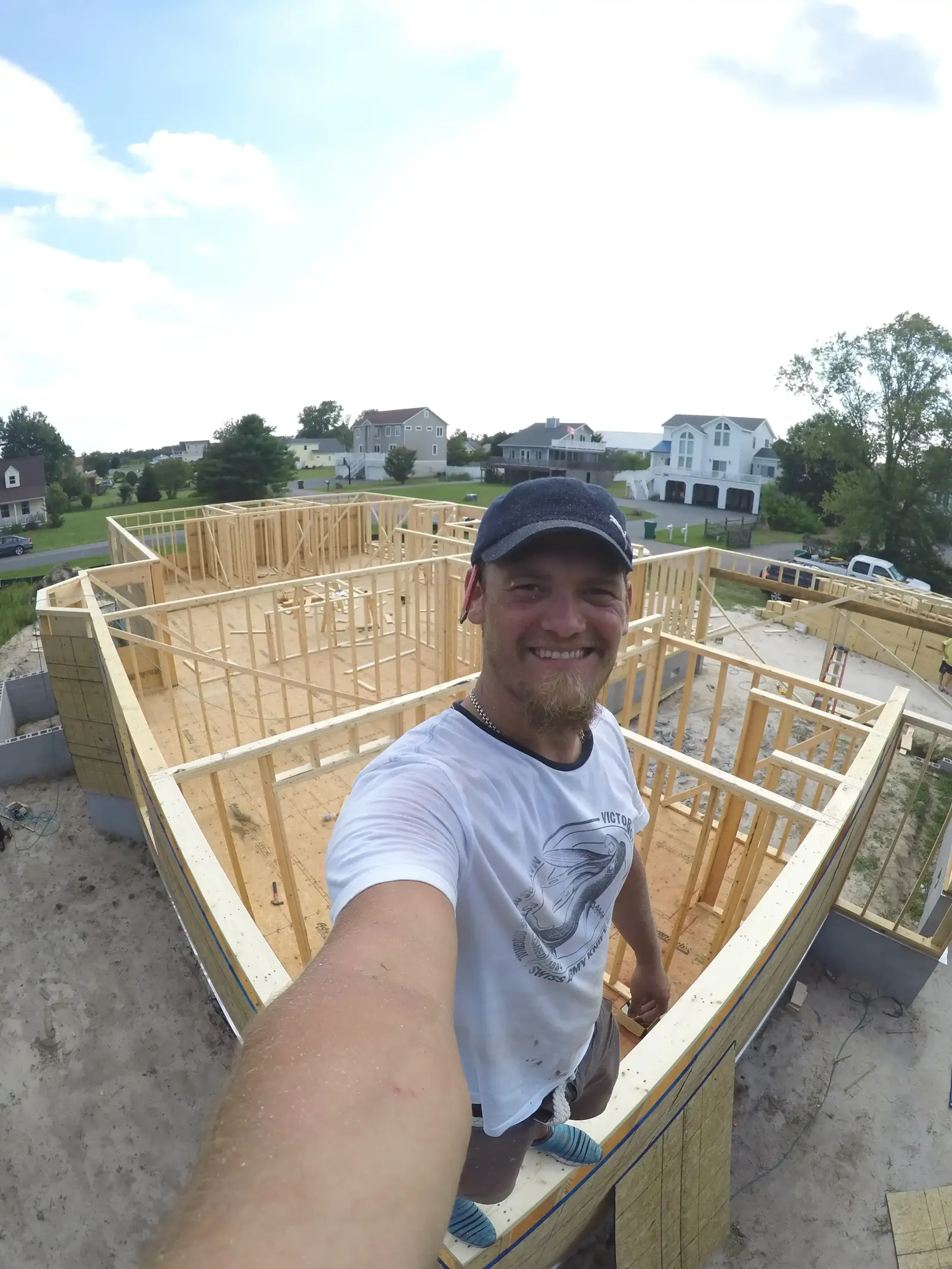
Central Maryland has both kinds of remodeler: design-build firms with showrooms in Annapolis and Columbia, and owner-operators like us working out of a shop in Gambrills. Homeowners planning a kitchen, two bathrooms, or a multi-room renovation ask which is better. The honest answer depends on the size of the job and how much you value dealing with one person. This is our take, bias declared: PRG is owner-operated, and there are projects we would tell you to take to a larger firm.
What Is the Difference Between an Owner-Operated Contractor and a Large Remodeling Company?
An owner-operated remodeling contractor is a licensed business where the owner estimates, builds or directly supervises, and answers for every project, bringing in licensed subcontractors for trades like electrical and plumbing. A large remodeling or design-build company splits those roles across a salesperson, a designer, a project manager and rotating crews, and the owner rarely sets foot on your job. Both can hold the same Maryland MHIC license and the same insurance.
The practical difference is the number of handoffs between the person who promised you the result and the person swinging the hammer. With an owner-operator there are none. With a large firm there are usually three or four, and each one is a place where a detail can be lost.
When Is a Large Remodeling Company the Better Choice?
A large design-build firm is the better choice when the project needs in-house architectural design, when several rooms must be under construction at the same time, or when the budget is above roughly $300,000 for a gut renovation with an addition. Firms with multiple crews can run a kitchen, two baths and a basement in parallel and absorb one crew's absence without stopping the job.
Choose the larger firm if any of these describe your project:
- You want drawings, 3D renderings and a showroom to pick selections in one place, and you are paying for that convenience knowingly.
- The project is a whole-house gut with structural changes and an addition, running 8–12 months. In Anne Arundel and Howard County that is typically $300,000–$500,000+.
- You need multiple trades working simultaneously in different parts of the house to hit a hard deadline.
- You would rather deal with a project manager on a schedule than with the person doing the work.
When Is an Owner-Operated Contractor the Better Choice?
An owner-operated contractor is the better choice for a single kitchen, one or two bathrooms, a deck or screened porch, or a phased 2–3 room renovation, which in Anne Arundel and Howard County means projects from roughly $15,000 to $150,000. At that scale the owner's direct involvement is what protects the finish quality, and there is no sales or design layer to pay for.
Choose the owner-operator if these matter to you:
- One accountable person. The person who measured your bathroom is the person who tiles it and the person you call in year two.
- The estimate is written by the builder. No salesperson quoting a number a crew later has to defend with change orders.
- Lower overhead. No showroom, no commission, no marketing department built into your price.
- Fewer crews in your house. A small team that knows the job, plus licensed subs for the trades that require them.
How Does Pricing Compare Between an Owner-Operator and a Large Firm?
For the same scope, an owner-operated contractor is usually the lower price because there is no showroom, sales commission or project-management layer to recover, while subcontractor and material costs are the same for both. The gap is rarely dramatic on a $30,000 bathroom; it grows on a $100,000 kitchen where a design-build markup covers design hours you may or may not need.
Two cautions. First, the cheapest bid is not always the owner-operator; a firm running high volume can buy cabinets and decking cheaper. Second, price only means something once the scope is identical. Our guide on how to compare remodeling quotes shows how to get there.
What Are the Risks of Hiring an Owner-Operator, and How Do You Check for Them?
The real risks of an owner-operated contractor are capacity and continuity: the owner takes on too many jobs at once, gets sick, or is the only person who knows your project. Check for them by asking how many projects run at the same time, who is on site when the owner is not, and whether the MHIC license and insurance are in the business's name. Then verify the license at the state lookup and ask for the certificate of insurance.
The questions that expose a stretched owner-operator:
- How many projects do you have open right now, and where is mine in the sequence?
- Who is on site on the days you are not, and who supervises them?
- Can I see three references from the last 12 months, in my county?
- What happens to my schedule if you are out for two weeks?
PRG keeps a deliberately small project load so Anton is on site, and brings in licensed subcontractors only for electrical, plumbing, HVAC and concrete. That is a choice about quality, and it means we sometimes book out further than a firm with six crews. We tell you that at the estimate.
What Are the Risks of Hiring a Large Remodeling Company?
The risks with a large remodeling company are the handoffs: the salesperson who quoted the job does not build it, the project manager can change mid-project, and the crew on site may be a subcontractor you never met. Change orders can become a profit center once the sales price is locked. None of this is universal, and good firms manage it well, but it is where large-company projects go wrong.
Ask a large firm: who exactly will be in my house, how often does the project manager visit, and what is the change-order markup. If the answers are vague, the handoffs are unmanaged.
Which Is Better for a Mid-Size Renovation in Anne Arundel or Howard County?
For a mid-size renovation in Anne Arundel or Howard County, meaning a kitchen, one to three bathrooms, a deck or porch, or a phased multi-room update up to about $150,000, an owner-operated MHIC-licensed contractor with licensed subs usually delivers better accountability and a lower price. Above that, or when the project needs architectural design and parallel crews, a design-build firm earns its overhead.
Whichever you choose, the checks are the same: verify the MHIC license, get the certificate of insurance, insist on a line-item written contract with a milestone payment schedule, and confirm who will physically be on site. Our guide on how to hire a licensed contractor in Maryland walks through the license lookup step by step.
How Does PRG Work as an Owner-Operated Contractor?
PRG Home Improvement LLC was founded in 2016 and has held MHIC license #113057 since 2017. Anton Sergeev estimates every job, performs or directly supervises the finish work, and is the person you call from the first site visit through the 1-year workmanship warranty. Licensed subcontractors handle electrical, plumbing, HVAC and concrete. We work from Gambrills across Anne Arundel County and Howard County, on kitchens, bathrooms, decks and porches, and phased whole-house renovations. Call 443-856-5379 for a free estimate.
Frequently Asked Questions
Is an owner-operated contractor cheaper than a remodeling company?
Usually, for the same scope, because there is no showroom, sales commission or project-management layer in the price. Material and subcontractor costs are similar for both. In Anne Arundel and Howard County the difference tends to be a modest share of a $30,000 bathroom and a larger one on a $100,000 kitchen.
Does an owner-operated contractor carry the same insurance as a large company?
A properly licensed owner-operator carries the same general liability insurance Maryland requires of every MHIC contractor, and workers' compensation where employees are on payroll. Ask for the certificate of insurance either way; the size of the company does not change what the certificate should show.
What happens if an owner-operator gets sick in the middle of my project?
Ask before signing. A well-run owner-operator has a lead carpenter who can keep the job moving and licensed subs already scheduled. PRG's contract states the timeline and the warranty in writing, and the MHIC Guaranty Fund protects Maryland homeowners against abandonment by any licensed contractor, large or small.
Is a design-build firm worth it for a single kitchen in Maryland?
Only if you want the in-house design service and are paying for it knowingly. For a kitchen in the $30,000–$60,000 full-replacement range, an owner-operator working with your cabinet supplier's designer delivers the same result with fewer handoffs and usually a lower total.